
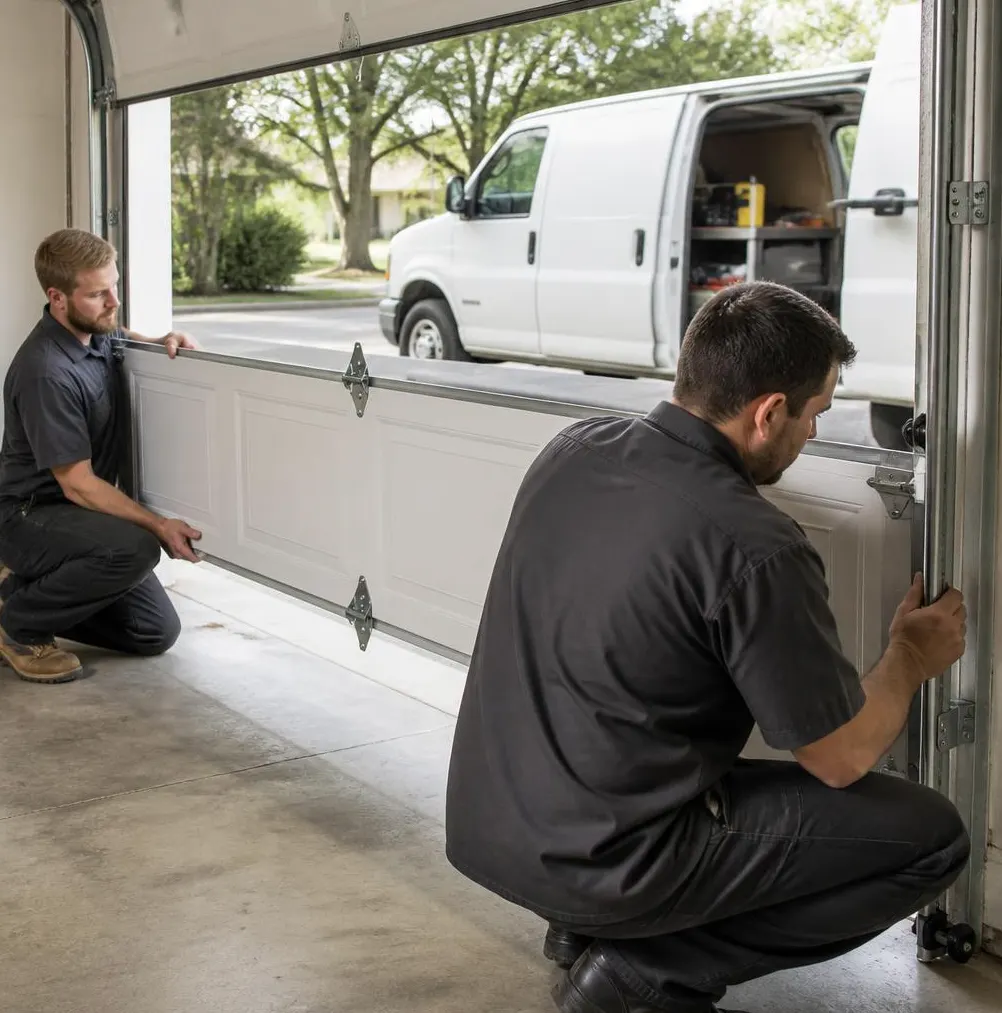
If your garage door worked fine through a dry October, that tells you almost nothing about how it'll hold up once the real winter rain and wind arrive. The exceptions matter more than the rule here: a door with worn weatherstripping, a wood panel with a hidden soft spot, or an opener that's never been tested on battery backup can all look perfectly normal right up until the first big storm exposes the problem.
Start With the Seals, Not the Opener
Most winter garage door complaints in this area trace back to water getting in where it shouldn't. The bottom seal (the rubber gasket along the floor) and the side/top weatherstripping are your first line of defense against months of steady rain.
- Bottom seal: Press a finger along the full length. If it's cracked, flattened, or has gaps where daylight shows through, water and wind-driven rain will find their way in. Replacement seals are inexpensive and most homeowners can swap one out in under an hour.
- Side and top weatherstripping: Check for brittleness or separation from the frame. In our climate, this material degrades faster than most manufacturers' warranties assume.
- Threshold seal: If you have one, clear out debris and check that it's still forming a tight line against the slab. Standing water at the base of the door is what eventually causes rot in wood panels and rust at the bottom of steel ones.
Give Wood Doors Extra Attention
If your garage door is wood or has wood trim, this is the season that finds every weakness. Moss and algae thrive in exactly the conditions Everett gets for months at a stretch—shade, moisture, and mild temperatures that never quite dry things out.
- Scrub visible moss or green staining off the surface before it works into seams and joints.
- Check corners and the bottom rail for soft or spongy wood. A screwdriver pressed gently into the surface will tell you fast—if it sinks in easily, rot has already started.
- Reseal or repaint any bare or worn spots now, while there are still dry stretches to let a coat cure. Once the steady rain sets in, you'll be waiting for a window that may not come until spring.
Lubricate the Right Way for Wet Weather
Hinges, rollers, and the torsion spring itself all need lubrication before winter, but the product matters more than usual here. Heavy grease attracts grit and holds moisture against metal, which speeds up corrosion. A silicone-based garage door lubricant sheds water better and won't gum up in the cold. Hit every hinge, the roller stems (not the nylon rollers themselves if you have them), and the spring, but skip the track—lubricating the track actually attracts dirt and can make rollers slip.
Test the Opener's Battery Backup Before You Need It
Wind storms knock out power in this area more than most people plan for, and a garage door with no manual override knowledge and a dead backup battery is a door you can't open. If your opener has a battery backup system, test it now:
- Unplug the opener or flip the breaker to simulate an outage.
- Confirm the door still opens and closes on battery power alone.
- If it doesn't, the battery likely needs replacing—most last 2-3 years and often fail quietly until the moment you need them.
Also locate your manual release cord and make sure everyone in the house knows where it is and how to use it, in case you're dealing with a dead battery and a stuck car at the same time.
Check Sensors and Tracks After Any Wind Event
The photo-eye safety sensors near the bottom of the tracks are sensitive to being bumped or jarred loose, which happens more often than people expect when a door gets rattled by gusts. After any significant wind storm, a quick visual check is worth it: both sensor lights should be solid, not blinking, and the tracks should still be parallel with no visible gaps at the brackets. A door that reverses unexpectedly or refuses to close fully is often telling you a sensor got knocked out of alignment, not that something more serious failed.
Don't Ignore a Door That Feels Heavier Than Usual
Cold doesn't do much to steel springs directly, but moisture and age do. If your door suddenly feels harder to lift by hand, or the opener strains and makes a different sound than usual, that's often a spring losing tension—not something to put off until it fails completely, usually at an inconvenient moment with the door stuck halfway up or down.
When to Call Everett Garage Door
If you've gone through this checklist and found a seal that's shot, a spring that feels off, or an opener battery that won't hold a charge, that's the point to bring in a technician rather than guess. Our Garage Door Maintenance visits cover a full inspection of seals, hardware, and balance before winter weather makes small issues worse, and if a spring does need attention, our Spring Replacement service gets it handled safely—this isn't a DIY repair given how much tension these components hold. We also handle opener troubleshooting if your battery backup or sensors aren't behaving the way they should.
If you're in Everett, Marysville, Lake Stevens, Mukilteo, Lynnwood, Mill Creek, Snohomish, or Edmonds and want your garage door checked before the next storm rolls through, give Everett Garage Door a call. We'll tell you plainly what needs attention now and what can wait.